
When a loved one passes away, families are often left not only grieving but also unsure of what legal steps come next. In many cases, the estate must go through probate, a court-supervised process used to settle debts and transfer assets.
At Mizak & Pacetti, we regularly help families in Parma and throughout Cuyahoga County understand how probate works, what to expect, and how to avoid common mistakes that can cause delays or disputes.
Below is an overview of how the probate process works in Cuyahoga County, Ohio.

What Is Probate?
Probate is the legal process used to administer a deceased person’s estate. This includes:
- Validating the will, if one exists
- Appointing an executor or administrator
- Identifying and valuing assets
- Paying debts and taxes
- Distributing remaining assets to beneficiaries
Probate cases in Cuyahoga County are handled through the Cuyahoga County Probate Court.
When Is Probate Required in Ohio?
Not every estate must go through probate. Probate is generally required when assets are held solely in the deceased person’s name and do not have a beneficiary showing or transfer-on-death designation.
Common assets that may require probate include:
- Real estate without a transfer-on-death affidavit
- Bank accounts without named beneficiaries
- Vehicles titled only in the decedent’s name
- Personal property of significant value
Assets such as life insurance, retirement accounts, payable-on-death bank accounts, and jointly owned property usually pass outside of probate.
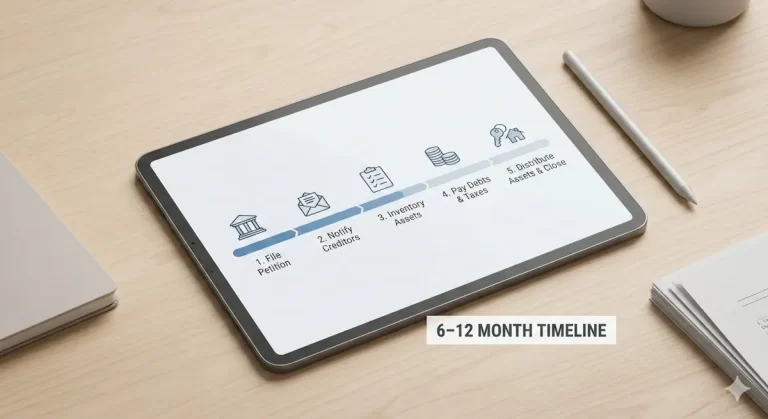
Step 1: Filing the Probate Case
The probate process begins when an application is filed with the Cuyahoga County Probate Court. If the deceased left a valid will, the named executor typically files the case. If there is no will, a close family member may apply to serve as administrator.
The court will review the filing and issue documents formally appointing the executor or administrator.
Step 2: Notice to Heirs and Creditors
Once the estate is opened, notice must be provided to heirs, beneficiaries, and known creditors. This gives interested parties the opportunity to raise objections or submit claims against the estate.
Ohio law sets deadlines for creditor claims, and missing these deadlines can affect whether debts must be paid.
Step 3: Inventory and Appraisal of Assets
The executor or administrator must identify all probate assets and file an inventory with the court. Some assets may require a formal appraisal to determine fair market value, particularly real estate or unique property.
Accurate inventories are critical, as errors can lead to court delays or disputes among beneficiaries.
Step 4: Paying Debts, Expenses, and Taxes
Before beneficiaries can receive distributions, the estate must pay:
- Funeral and burial expenses
- Outstanding debts and bills
- Court costs and administrative expenses
- Any applicable estate taxes
Ohio does not have a state estate tax, but certain estates may still have federal tax considerations.
Step 5: Distributing Assets and Closing the Estate
After debts and expenses are paid, remaining assets are distributed according to the will or, if there is no will, under Ohio’s intestate succession laws.
The executor or administrator then files a final accounting and requests that the court close the estate. Once approved, probate officially ends.
How Long Does Probate Take in Cuyahoga County?
The length of probate depends on the size and complexity of the estate. Simple estates may be completed in several months, while larger or contested estates can take a year or longer.
Delays often occur due to missing documents, disputes between heirs, creditor issues, or improper filings.

Do You Need a Probate Attorney?
While Ohio law does not require an attorney for every probate case, having legal guidance can help avoid costly mistakes, reduce delays, and protect the executor or administrator from personal liability.
At Mizak & Pacetti, we guide clients through each step of the probate process and work to resolve estates as efficiently and smoothly as possible.
If you have questions about probate in Cuyahoga County or need help administering an estate, speaking with an experienced probate attorney early can make a significant difference.
FAQ
Q: Do I have to file probate downtown in Cleveland, or can this be handled from Parma?
A: A lot of families ask this because no one wants unnecessary trips downtown while they are grieving. All probate cases for the county go through the Cuyahoga County Probate Court, which is in Cleveland, but most of the work does not require you to physically be there. If you are in Parma, Parma Heights, or Seven Hills, much of the filing and communication can be handled for you. We guide you through what truly needs attention and what can be handled behind the scenes.
Q: How long does probate usually take here in Cuyahoga County?
A: This is one of the most common concerns we hear from families locally. In Cuyahoga County, a simple estate often takes several months, but it can stretch closer to a year if there are real estate issues, creditor claims, or family disagreements. Delays usually come from missing paperwork or mistakes in filings, not the court itself. Getting it set up correctly at the start can save months of frustration.
Q: What happens if my parent owned a house in Parma but had no will?
A: This situation is very common in Parma and the surrounding suburbs. If there is no will, Ohio’s intestate succession rules decide who inherits, and someone must apply to be appointed as administrator through probate court. The house typically cannot be sold or transferred until the court gives approval. We help families understand who can serve and how to avoid delays that often pop up with real estate.
Q: Do small estates still have to go through probate around here?
A: Many people assume small estates automatically avoid probate, but that is not always true. In Cuyahoga County, it depends on how assets were titled and whether beneficiaries were named, not just the dollar amount. Even a modest bank account or vehicle titled only in the deceased’s name can trigger probate. We can quickly review the situation and tell you if a simplified option applies.
Q: Can I live out of state and still handle a probate case here?
A: Yes, and this comes up often with families who grew up in Parma or Cleveland but moved away. You do not have to be local to serve as executor or administrator, but you must follow Ohio probate rules closely. Out-of-state executors often run into delays because of missed deadlines or unfamiliar paperwork. Having local guidance helps keep things moving smoothly.
Q: Are there local rules that slow probate down in Cuyahoga County?
A: Every county has its own procedures, and Cuyahoga County is no exception. The probate court here is thorough and expects accurate inventories, timely filings, and proper notice to creditors. Even small errors can result in rejected filings and extra weeks of waiting. Knowing how this court operates helps avoid common setbacks.
Q: What debts have to be paid before anyone gets inheritance money?
A: This is a stressful question for many families. In Ohio probate, funeral costs, court expenses, and valid creditor claims must be paid before distributions are made. Cuyahoga County enforces strict timelines for creditor claims, which can affect what gets paid and what does not. We help make sure debts are handled correctly so executors are not personally exposed.
Q: Do I really need a probate lawyer if the will seems straightforward?
A: Many people think probate is just paperwork until a problem arises. Even simple estates in Cuyahoga County can run into issues with asset valuation, creditor notices, or beneficiary questions. A small mistake can create months of delay or personal liability for the executor. Having guidance upfront often prevents much bigger problems later.
Q: How soon should I talk to someone after a loved one passes?
A: We usually recommend reaching out sooner rather than later, even if you are not ready to file anything yet. Early questions about assets, deeds, and beneficiary designations can save time once probate starts. Families in Parma often tell us they wish they had called before trying to handle everything themselves. A short conversation can clarify next steps and reduce stress.
If you are dealing with a probate estate in Parma or anywhere in Cuyahoga County, you do not have to figure it out on your own. The probate process can feel overwhelming, especially while you are grieving, but having the right guidance early can prevent delays and costly mistakes. The probate attorneys at Mizak & Pacetti are here to answer your questions, explain your options, and help you move forward with confidence. Contact us today to schedule a free consultation and get clear next steps for your situation!

Jason, a partner at Mizak & Pacetti, LLC, brings 18 years of experience in estate planning, estate administration, business law, and civil litigation. He specializes in preserving family legacies, managing estates, and resolving disputes. Jason also handles real estate issues, asset management, and business disputes within estates, providing strategic, empathetic legal solutions.